

Add Row
Add Element
  • Facebook
    update
  • X
    update
  • update
  • update
  • update
  • update
  • update
Add Element
cropper
update

Home Services Growth Hub

advanced marketing strategies and leadership insights

cropper
update
Add Element
  • Home
  • Categories
    • Expert Interviews
    • Success Stories
    • Trend Reports
    • Case Studies
    • Interactive Workshops
    • Tool Tutorials
    • Strategy Guides
    • Leadership Hacks
  • Profiles
August 25.2025
6 Minutes Read

What Is a Small Business Coach and How Can They Help Your Business?


Are you struggling to unlock your business’s full potential or wondering, what is a small business coach and if you really need one? This detailed guide answers the most common questions and sheds light on how a small business coach can catalyze growth, improve profitability, and empower you to reclaim your time. Learn from industry expert Sachin Deshpande of ActionCOACH and discover actionable insights that could redefine your business journey.

Understanding What Is a Small Business Coach: The Role and Focus

So, what exactly does a small business coach do? Fundamentally, a small business coach is a professional who partners with business owners to navigate the complexities of running and growing their companies. According to Sachin Deshpande, of ActionCOACH, their clients typically include business owners who have operated for at least two years, employing more than five people, and generating revenues between $500,000 and $50 million annually. This coach helps these entrepreneurs identify obstacles, develop strategies, and implement solutions focused on profitability, revenue growth, team management, and work-life balance.

Sachin emphasizes that coaching is not a one-size-fits-all approach but a strategic partnership. Coaches analyze your unique business challenges related to "people management," including hiring, retention, and workplace dynamics, as well as financial metrics. They guide you toward operational freedom—where your business thrives without constant owner intervention—ultimately moving you closer to financial independence and personal freedom.

“A small business coach helps you gain clarity, set achievable goals, and implement a structured plan that guarantees measurable results,” Sachin explains. This comprehensive support can turn a struggling or stagnant business into a dynamic, profitable enterprise.

As you consider the impact of coaching on your business, it's also valuable to explore how targeted marketing strategies can amplify your results. For instance, learning how to market your finished jobs can directly support the growth initiatives you develop with your coach, ensuring your hard work gets the recognition—and leads—it deserves.

What You'll Learn

  • The definition and core responsibilities of a small business coach

  • How business coaching differs across industries and company sizes

  • Benefits of coaching, including guaranteed return on investment

  • Typical costs and considerations when hiring a small business coach

  • How coaching supports leadership development and business scalability

Key Benefits of Engaging a Small Business Coach
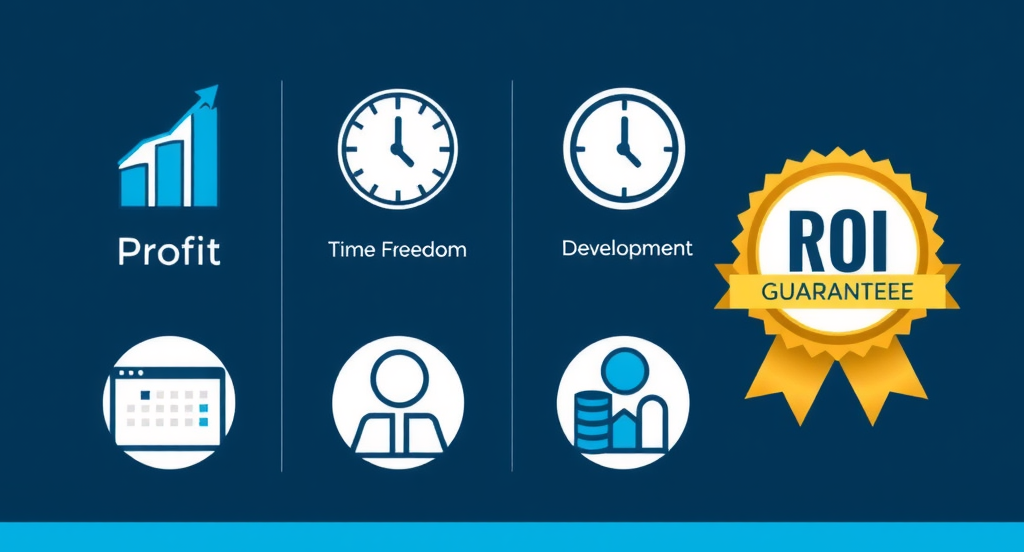


Small business coaching advantages include profit, time freedom and leadership development

Besides financial gains, coaching enhances productivity by addressing team dynamics and leadership capabilities. Many small business owners feel overwhelmed by routine tasks, which detracts from strategic growth activities. A coach works with you to regain control over your time and improves your work-life balance. The ultimate objective is for your business to run efficiently without requiring your daily presence, providing you real freedom.

Sachin also highlights that coaching is tailored by industry experience, ranging from medical device manufacturing to financial planning and home improvement services. This sector-specific understanding ensures advice and strategies are practical and effective, meeting the unique demands of your business vertical.

Understanding the Costs Associated with a Small Business Coach

One of the most frequently asked questions by entrepreneurs is: How much does a small business coach cost? Pricing can vary widely depending on the coach’s expertise, the services offered, and the scope of engagement. While some coaches charge hourly rates, others may offer monthly programs or performance-based fees.

Sachin Deshpande advises potential clients to consider coaching as an investment rather than an expense. The return, often measured through revenue growth, cost savings, or operational improvements, tends to outweigh upfront costs. Some coaching companies, like ActionCOACH, offer customizable packages that can suit different budgets and business sizes. Additionally, ActionCOACH’s guarantee provides reassurance for those worried about financial risk.

On average, business coaching can range from several hundred to a few thousand dollars per month depending on frequency and depth of service. It is important to evaluate the coach’s track record and the measurable outcomes they promise to ensure your investment is worthwhile.

How to Select the Right Small Business Coach for Your Needs

Choosing the appropriate coach requires evaluation beyond just pricing. Sachin Deshpande, of ActionCOACH, emphasizes looking for coaches who demonstrate expertise in your specific industry and show a proven methodology that resonates with your business philosophy. Many businesses benefit from working with coaches who offer a structured program with defined short and long-term goals to track progress effectively.

Consulting referrals and current client testimonials can provide insight into a coach’s effectiveness. Furthermore, many coaches offer free initial consultations or growth strategy sessions—Sachin offers two complimentary growth strategy sessions for clients of his close referral partners. These sessions help evaluate compatibility, needs, and expected outcomes without commitment.

Finally, inquire about how the coach integrates technology and digital marketing strategies, which are increasingly crucial. There are key intersections between keyword strategies and content optimization that some coaches can help leverage effectively.

The Process and Deliverables of a Small Business Coaching Engagement

A coaching engagement often begins with an in-depth assessment of your business structure, revenue streams, team composition, and growth goals. From there, coaches develop a tailored plan focusing on priority areas such as profitability enhancement, leadership development, or operational efficiency.

Sachin Deshpande highlights that throughout the coaching journey, continuous performance monitoring and strategy refinement take place. Clients receive actionable insights and practical tools to implement positive change. The goal is not just advice but measurable progress towards defined benchmarks.

Deliverables may vary, including strategic business plans, marketing initiatives, leadership workshops, or productivity tools. Integration with existing business processes is key to ensure sustainability and long-term impact.

Frequently Asked Questions (FAQs) About Small Business Coaching

Question

Answer

What exactly does a business coach do?

A business coach partners with owners to identify challenges, develop strategic plans, and guide implementation to improve profitability, team management, and growth.

How much does a small business coach cost?

Costs vary from a few hundred to several thousand dollars monthly depending on services and coaching intensity, often viewed as an investment for significant ROI.

What is the salary of a business coach?

Business coaches’ earnings vary widely based on experience, client base, and services offered, commonly earning from $50,000 to over $250,000 annually.

How much is a business coach per month?

Monthly fees typically range from $500 to $5,000 considering personalized service, session frequency, and deliverables included.

Expert Insights on Optimizing Your Business with Coaching

"Small business coaching is transformative when it aligns with your business's unique challenges and goals. At ActionCOACH, we guarantee a return on investment within 17 weeks, or we keep coaching for free. This reflects our commitment to real, tangible outcomes for business owners." – Sachin Deshpande, ActionCOACH

How Small Business Coaching Integrates with Digital Marketing

In today’s digital economy, effective marketing is essential for sustainable growth. Using viral video marketing can dramatically enhance visibility and lead generation. Creating articles optimized for popular keywords such as "small business coach" or "executive coach" helps businesses rank higher on search engines, driving organic traffic.

Coaches who incorporate digital strategies, including blogging and social media integration, can provide clients with comprehensive growth tools. For example, blogging packages that include consistent content updates help build backlinks—boosting search engine rankings and expanding reach.

Combining coaching with robust marketing strategies ensures clients not only improve internally but also attract new business efficiently, creating a virtuous growth cycle.

ActionCOACH’s Unique Guarantee and Industry Experience

What sets ActionCOACH apart is its performance-based guarantee, providing clients with confidence that investment will yield meaningful results within the first 17 weeks. According to Sachin Deshpande, this guarantee underscores their focus on accountability and measurable success.

ActionCOACH also brings sector-specific expertise to bear, having worked with clients across diverse industries such as small medical device manufacturing, financial planning, insurance, and home improvement services. This broad experience equips them to provide relevant, actionable advice and referrals tailored to various business needs.

Prospective clients benefit from this extensive knowledge, combined with personalized coaching that adapts to their unique market dynamics and organizational culture.

Next Steps: Engaging a Small Business Coach

If you’re considering the question what is a small business coach because your company needs guidance, here are some practical next steps:

  1. Assess your business needs and challenges to identify coaching priorities.

  2. Schedule initial consultations or strategy sessions, such as those offered by Sachin Deshpande, to explore fit and services.

  3. Evaluate coaches’ experience in your industry and their methodology.

  4. Consider digital marketing integration as part of coaching to maximize your reach.

  5. Request client testimonials and verify performance guarantees to reduce risk.

Taking these steps will help ensure you find the right partner to accelerate your business’s growth effectively and sustainably.

Conclusion

Ready to transform your business? Engage a qualified small business coach to unlock growth, improve profitability, and reclaim your time with actionable strategies and guaranteed support.

Click To Learn More

Expert Interviews

71 Views

0 Comments

Write A Comment

*
*
Related Posts All Posts
02.12.2026

Industry Trends: How Networking and Transparency Drive Success in Small Business Lending

Did you know that nearly 70% of small businesses seeking financing face rejection from traditional lenders each year? This startling fact highlights just how challenging the current small business lending trends have become. Yet, amidst these hurdles, some companies succeed by embracing innovative approaches such as strong networking and unwavering transparency. In this article, we explore how these factors shape the landscape, especially with government-backed SBA loans, to help small businesses thrive in today's competitive loan market. Startling Facts About Small Business Lending Trends The journey to secure financing remains a steep climb for many small business owners. Recent data reveals that despite a surge in loan application volumes, approval rates have dwindled due to tighter underwriting standards. Small business lending trends reflect this challenging environment where access to capital is becoming increasingly competitive. Factors such as fluctuating interest rates, credit score scrutiny, and economic uncertainty directly affect lending outcomes. Moreover, a significant portion of small businesses either misunderstand lending options or fall victim to common myths — particularly about SBA loans and eligibility criteria. For many, the perception that loans are difficult to qualify for due to paperwork or credit requirements has discouraged them from pursuing viable funding routes. It is crucial for small business owners to gain clear, accurate insights into these trends to avoid missed opportunities. Bailey Massey, from Committed to Capital, emphasizes this: "Understanding the nuances of SBA loans and other financing options can empower business owners to secure affordable and sustainable funding solutions tailored to their long-term goals. " Overview of Small Business Lending Trends and SBA Loans Bailey Massey, of Committed to Capital, explains, "SBA loans offer longer repayment terms and are the most affordable long-term option for small businesses, despite stricter requirements." Key Features of SBA Loans in Business Lending Within the evolving arena of small business lending trends, SBA loans stand out as a critical financing tool. Supported by the U. S. government, these loans provide small businesses access to capital with repayment periods extending up to 25 years and loan amounts reaching $5 million. Typically, SBA loan interest rates are competitive — calculated as prime rate plus a margin, adjusted quarterly — making them an affordable choice over the long term. However, SBA loans do come with qualifications that can seem restrictive. Generally, applicants must have a minimum of two years in operation and meet creditworthiness standards. "Although SBA loans have tougher criteria, they help establish sustainable debt structures for small businesses," says Bailey Massey, highlighting how these loans balance accessibility with responsible lending. Committed to Capital specializes in tailoring loan options to individual small business needs. Their streamlined approach provides customized solutions often within 24 to 48 hours of initial consultation, which is essential for business owners requiring timely financing to buy equipment, expand fleets, or bridge receivables. For small business owners looking to strengthen their overall growth strategy, integrating financial planning with digital visibility can be a game-changer. Exploring proven local SEO strategies for small business growth can help attract more customers and complement your lending efforts for sustainable expansion. The Role of Networking in Small Business Lending Trends Bailey Massey highlights, "Networking is a key strategy for us, helping connect clients with tailored loan options and creative financing solutions." Examples of Networking Success in Business Lending Networking has emerged as a pivotal element in the sphere of small business lending trends, enabling brokers, lenders, and business owners to share knowledge and develop creative financing pathways. Through strategic relationships with lenders and groups like BNI chapters, companies like Committed to Capital amplify their reach and offer clients access to a wide array of loan products that suit diverse needs. Bailey Massey emphasizes the significance of these connections: “Our success lies in fostering professional networks across regions, which allows us to source the best financial options tailored to each client. Whether it's helping HVAC contractors finance new trucks or providing capital to bridge receivables, these personal connections make a genuine difference. ” Additionally, networking facilitates ongoing education about market shifts and emerging loan products, which in turn improves client outcomes and satisfaction. In this way, both small business owners and lenders stay ahead of evolving small business lending trends while leveraging collective wisdom. Transparency and Honesty: Pillars of Successful Small Business Lending Common Misconceptions and Myths About Small Business Loans According to Bailey Massey, "We do not push sales if red flags like low credit scores or insufficient business history are present; honesty is our priority." Transparency remains an indispensable pillar when navigating small business lending trends. Many business owners encounter misinformation about loan availability, qualification standards, and repayment obligations. Such myths can lead to misguided expectations, loan rejections, or worse — unmanageable debt. Committed to Capital champions a culture of honesty and openness. Bailey Massey states, “We prioritize transparency and do not push loans if a client’s profile has significant red flags such as low credit or too short a business track record. Our goal is to foster trust and guide clients realistically through the lending process. ” This approach builds client confidence and long-term relationships, essential in an industry where personal service is key. By dispelling myths, clarifying terms, and detailing loan structures upfront, lenders and brokers can better align expectations with realities, enabling more successful applications and sustained business growth. Tailored Loan Solutions: Meeting Diverse Small Business Needs Typical Client Profiles and Loan Uses One size rarely fits all when it comes to loans in the current landscape of small business lending trends. Tailored solutions have become a hallmark for companies looking to address the unique financing needs of various industries and business stages. Typical clients served by Committed to Capital include HVAC contractors in need of financing for trucks, manufacturers seeking equipment loans, and service providers requiring capital to bridge receivables. Each loan packaged reflects the client’s particular cash flow, credit profile, and expansion goals. Bailey Massey notes, “Our streamlined, one-stop-shop approach ensures we find the best-fit loan products quickly, often within days. This flexibility and personalized service differentiate us in a competitive lending environment where responsiveness and expertise matter greatly. ” Such tailored lending strategies help small businesses capitalize on growth opportunities and navigate financial challenges effectively. Current Challenges and Approval Rates in Small Business Lending Impact of Economic Outlook and Industry-Specific Issues Despite some positive developments, several challenges continue to impact small business lending trends. Declining approval rates over recent years reflect higher scrutiny from financial institutions amid economic uncertainties — including inflation pressures, supply chain disruptions, and volatile market demand. Industry-specific factors such as seasonal business fluctuations or regulatory changes also affect lenders’ risk assessments. For example, businesses in construction or hospitality often face tougher lending conditions compared to more stable sectors. Business owners see these hurdles firsthand. Bailey Massey explains, “Economic conditions heavily influence lending standards and approval rates. Small business owners need to stay informed and prepare robust documentation to improve their chances. Partnering with knowledgeable brokers becomes ever more important to navigate this complex environment. ” What You'll Learn: Key Insights on Small Business Lending Trends Understanding SBA loan benefits and eligibility The importance of networking in securing business loans How transparency improves lending success Common misconceptions about small business loans Current lending challenges and approval trends People Also Ask: Frequently Asked Questions on Small Business Lending What are the current trends in lending? Current lending trends emphasize a shift towards technology-driven platforms, increased use of government-backed loans such as SBA programs, and a growing emphasis on personalized loan structures to suit diverse business models. However, caution and higher approval barriers persist as lenders balance risk with demand for capital. What are the 5 C's of business lending? The five C's of business lending — Character, Capacity, Capital, Collateral, and Conditions — remain fundamental assessment criteria lenders use to evaluate loan applications. They gauge the borrower’s trustworthiness, ability to repay, financial reserves, assets pledged, and overall economic context. What are the top 3 priorities of small business owners in 2025? According to recent studies, the top priorities include securing affordable financing, managing cash flow effectively, and investing in digital transformation initiatives. Financing access and cost continue to be critical factors influencing business growth decisions. How much income do I need for a $500,000 business loan? Exact income requirements vary by lender and loan product. Generally, lenders expect the business to demonstrate sufficient cash flow to cover loan payments with a comfortable margin, often requiring an annual revenue multiple of the loan amount plus proof of stable profitability. Tables: Small Business Lending Data and Trends Year Lending Volume ($ Billion) Approval Rate (%) Interest Rate Range (%) Credit Quality Index 2019 150 65 4.5 - 7.0 75 2020 145 60 4.2 - 6.8 70 2021 140 58 4.7 - 7.3 68 2022 135 55 5.0 - 7.8 65 2023 130 52 5.5 - 8.0 63 2024 (Projected) 125 50 5.8 - 8.5 60 2025 (Projected) 120 48 6.0 - 9.0 58 Key Takeaways Small business lending trends show a decline but opportunities remain through SBA loans. Networking and transparency are critical success factors in securing business loans. Tailored loan solutions better meet diverse small business needs. Understanding lending criteria and dispelling myths improves loan application success. Economic conditions continue to shape lending standards and approval rates. Conclusion: Embracing Networking and Transparency to Navigate Small Business Lending Trends Small businesses can improve financing success by actively engaging in trusted networks and prioritizing transparent communication with lenders. These strategies empower them to navigate the complex lending landscape more effectively. If you’re ready to take your business growth to the next level, consider how digital innovation and financial strategy can work hand in hand. Delving into how AI-powered form submissions can enhance your local SEO strategy offers a forward-thinking approach to attracting more qualified leads and streamlining customer engagement. By combining robust lending practices with advanced marketing tactics, small businesses can unlock new opportunities and stay ahead in a rapidly evolving marketplace. Explore these insights to discover actionable steps that can elevate your business’s visibility and financial resilience. Sources https://home-services-growth-hub.com/committed-to-capital-interview https://www.sba.gov/funding-programs/loans https://www.biz2credit.com/blog/small-business-lending-trends https://www.experian.com/blogs/ask-experian/the-5-cs-of-credit-business

02.06.2026

Industry Trends: The Growing Popularity of No Net Cost Insurance Plans

By understanding the intersection of compensation, insurance, and financial planning, you can make more informed decisions for your team and your business.

01.26.2026

Unlocking Entrepreneur Success: Crafting a Compelling Pitch Through Storytelling

Update How Storytelling Can Transform Your Pitch Emma Grede, the innovative mind behind influential brands like Skims and Good American, believes storytelling is foundational to a compelling pitch. In her recent conversation on the Mel Robbins Podcast, she shared vital insights that entrepreneurs and founders should consider to captivate their audience and drive their businesses forward. Grede's message is clear: to persuade investors and consumers alike, it's essential to go beyond just the facts and figures; it's about creating a narrative that resonates. Four Key Elements of a Compelling Story 1. Start with a Human Problem: Rather than leading with product features or price points, Grede advocates for beginning with a relatable human problem. By doing so, the pitch not only engages the listener emotionally but also sets a foundation for a narrative that highlights the solution offered by your product or service. Investors are less likely to back a spreadsheet than a compelling story that showcases how your business addresses real-life challenges. 2. Build Emotion into the Narrative: According to Grede, strong storytelling weaves in emotional elements, creating a connection between the storyteller and the audience. This emotional bond encourages a deeper investment—both financial and personal—when it comes to consumers and investors appreciating your vision. 3. Emphasize Authenticity: The journey of your brand—how it started, the struggles faced, and the successes achieved—should reflect authenticity. This transparency fosters trust and credibility, qualities that are paramount in a founder's pitch. 4. Encourage Action through Connection: The ultimate goal of storytelling is to inspire action. By delivering a compelling narrative, founders can motivate potential investors to believe in the brand and encourage customers to engage with the product. The Power of Narrative in Business Grede's principles resonate with a broader trend in entrepreneurship where compelling storytelling proves to be instrumental in the success of numerous startups. As more young people embrace entrepreneurship, navigating the path from employee to founder also requires a shift in mindset — one that involves embracing storytelling as an essential skill. Emotional Intelligence as a Leadership Tool In the dynamic environment where startups often emerge, emotional intelligence combined with effective storytelling can set a founder apart from their competitors. Understanding one's audience, adapting messaging, and showing vulnerability when sharing the founder's journey creates an inclusive culture that attracts not only investors but builds dedicated consumer loyalty. The Road Ahead: Fortifying Your Narrative Skills As we move further into an age where authenticity and personal branding captivate audiences, Grede’s emphasis on storytelling will likely become a cornerstone for successful founder pitches. Entrepreneurs looking to enhance their pitch narratives might benefit from reflecting on their personal stories and recognizing the unique challenges their ventures aim to address. Moreover, with the rise of social media and digital platforms, sharing these narratives has never been more feasible. Entrepreneurs are encouraged to train themselves in storytelling, empowering them to connect meaningfully with audiences across various channels. Conclusion: The Call to Action As aspiring entrepreneurs hone their stories, they should remember that every successful brand begins with a narrative that resonates with its audience. Hence, investing in storytelling training is an essential step toward capturing attention, funding, and loyalty in an increasingly competitive marketplace. Take a moment to reflect on your unique story: What is the human problem you aim to solve, and how can you craft that narrative into a compelling pitch?

Terms of Service

Privacy Policy

Core Modal Title

Sorry, no results found

You Might Find These Articles Interesting

T
Please Check Your Email
We Will Be Following Up Shortly
*
*
*